Bellingham, WA · Whatcom County
Basement Water Removal in Bellingham, WABasement Water Pump Out & Basement Moisture Inspection
Basement Water Removal in Bellingham runs from basement water pump out and basement drying services to basement dehumidification.
Answered 24/7
Expert Basement Water Removal in Bellingham, Lynden and Anacortes
A basement that looks dry a day after a flood in Bellingham can still hold a lot of water in the slab, the bottom of the walls and under flooring. That hidden water causes the musty smell many basements have.
A single storm or burst pipe in Bellingham can flood a basement. Local basement water removal pros serve Bellingham and nearby Lynden and Anacortes, with help available around the clock.
Comprehensive Basement Water Removal Solutions
Basement Water Pump Out
Pumping starts once power to the basement is safe. Deep water goes first, then extractors handle the thin layer left on the floor.
Basement Moisture Inspection
An inspection shows how high water wicked up the walls and how far it spread under flooring, which sets the drying plan.
Basement Wall Drying
Opening the bottom of finished walls lets air reach the studs and sill plate, which otherwise stay wet behind the drywall.
Basement Drying Services
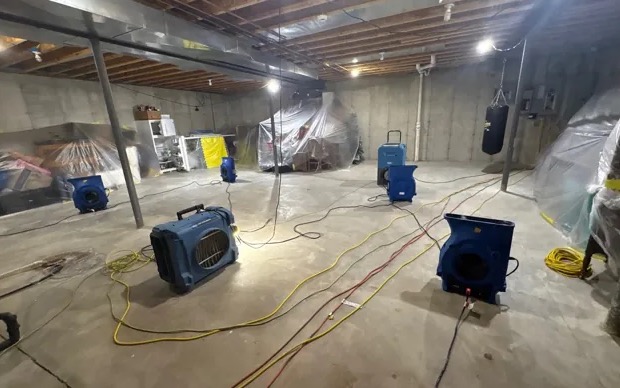
After pumping, air movers and dehumidifiers dry the walls, framing and slab. Readings are taken daily until every surface is back to normal.
Emergency Basement Flooding
Emergency response starts with making power safe, stopping the source if possible and pumping out the water.
Common Symptoms Requiring Basement Water Removal
Rusted Appliances or Furniture
Rust on appliance bases, furniture legs or metal shelving points to standing water or long-term dampness.
Gurgling Sounds From Drains
Gurgling floor drains or slow drains can be an early sign of a sewer line problem.
Efflorescence on Concrete Walls
White, powdery deposits on concrete walls mean water is passing through the masonry.
Water Stains on Walls or Ceiling
Stains on lower walls or the ceiling below a bathroom or kitchen point to a leak.
How Basement Water Removal Works in Bellingham
Step 1: Source Control and Water Pump Out
The leak is shut off and standing water is pumped out, starting at the lowest point.
Step 2: Water Extraction
Extractors pull water from carpet, pad and concrete, and wet vacs clear corners and stairs.
Step 3: Dehumidification and Drying
Large dehumidifiers and air movers dry walls, framing and slab over several days.
Step 4: Inspection and Clearance for Repair
Final readings confirm the basement is dry and ready for drywall and flooring repairs.
Sources of Basement Water Problems
High Water Table and Hydrostatic Pressure
A high water table presses groundwater against the slab and walls, forcing it inside.
Clogged or Damaged Gutters
Clogged gutters and short downspouts dump roof water right next to the foundation.
Plumbing Leaks or Pipe Bursts
Supply lines, drain pipes and water heaters in the basement can leak or burst onto the floor.
Sewer Line Backups and Blockages
A blocked sewer line can push wastewater up through basement floor drains and toilets.
Both Residential & Commercial Basement Water Removal
Residential Basement Water Removal
Families should keep children and pets away from basement water until power is safe and the type of water is known.
Commercial Basement Water Removal
In restaurants and shops, basement water near food or stock storage needs removal and cleaning before those areas are used again.
The Risks of DIY Basement Water Removal
A small puddle on bare concrete can be handled with a wet vac, towels and a dehumidifier. Call local basement water removal pros if water reached carpet, drywall or framing, or covers much of the floor.
What Influences the Price of Basement Water Removal
In Bellingham, the drying phase usually costs more than the pumping, because basements need equipment running for several days.
Access and Complexity
Narrow stairs, low ceilings and crowded storage areas make the work slower and longer.
Basement Square Footage
Larger basements need more extraction, more drying equipment and more days of drying.
Affected Materials
Finished walls, carpet and laminate take more removal work than bare concrete.
Does Insurance Cover Basement Water Removal?
Many homeowner policies cover sudden basement water from a burst pipe but not groundwater seepage. Sewer backup coverage is often an add-on, so check yours.
The Value of Professional Basement Water Removal
Methodical Water Removal Process
Water is removed in a set order: pump-out, extraction, removal of soaked materials, then drying.
Moisture Inspection
Meters and thermal cameras find water in walls, floors and slab that looks dry.
Clear Communication
You get plain updates on what was found, what was removed and how drying is going.
Round-the-Clock Basement Water Removal for Bellingham
Basement taking on water in Bellingham? Make power safe if you can, move what you can and call (425) 406-3256. Help is available 24/7.
Call Now (425) 406-3256Basement Water Removal Serving Bellingham and Surroundings
Each place listed below has its own page with local details.
- Basement Water Removal in Lynden
- Basement Water Removal in Anacortes
- Basement Water Removal in Mount Vernon
- Basement Water Removal in Oak Harbor
- Basement Water Removal in Stanwood
- Basement Water Removal in Camano
- Basement Water Removal in Arlington
- Basement Water Removal in Port Townsend
- Emergency Damage Restoration in 98225
- Storm Damage Restoration in 98225
- Water Damage Restoration in 98225
- Water Extraction Service in 98225
- Water Leak Detection in 98225
- Water Removal Service in 98225
- Emergency Damage Restoration in 98226
- Storm Damage Restoration in 98226
Answers to Top Basement Water Removal Queries
What equipment is used for basement water extraction?
Submersible pumps, extractors, wet vacs, air movers, large dehumidifiers and moisture meters to confirm drying.
How long does basement drying take?
Often several days or longer, because concrete and cool basement air hold moisture. Daily readings show when it is done.
What is emergency basement flooding response?
Help any hour to make power safe, stop the source, pump out water and start drying before more damage sets in.
How does a basement moisture inspection work?
Moisture meters and thermal cameras check walls, floors and the slab, including behind finished walls and under flooring.
Why is basement dehumidification important after pumping?
Walls and concrete keep releasing moisture for days. Dehumidifiers remove it so the basement does not stay damp.